
Ben Iannotta

Editor, reporter and strategic leader known for producing compelling journalism through engaging storytelling, deep research, investigation and visualization. Former editor of Aerospace America and Gannett-owned C4ISR Journal. Works published by the Associated Press, New Scientist, The New York Times, Popular Mechanics, Reuters, Smithsonian Air & Space, Space News and The Washington Post.   

Local News Reporting

What I learned from walking the beach for “Avy Baby”

Walking south on the beach from busy Flagler Avenue toward 7th Avenue, toddlers played a few feet from the packed sand of the traffic lanes where cars passed single file. With Memorial Day weekend behind us, the traffic was light. A soccer ball bounced into the northbound lane at one point. A girl, perhaps of grade school age, looked over her shoulder and collected it.Most cars appeared to be going slower than the posted speed limit of 10 mph. One car passed me going faster than the others, and...


Meet the Gnarlies, NSB's summer baseball team

Baseball in New Smyrna Beach has for years centered mainly around the Cudas, the high school team with a rich history tracing back to at least the 1930s. For a time, the Cudas were joined by a men’s team, the Crackers, which started out as a semi-pro team that played, for example, the Cocoa Indians, before shifting to amateur ball in 1949. For at least one spring, 1948, a minor league team, the Roanoke Red Sox, managed by former Sox third baseman Pinky Higgins, trained in NSB. That same year a b...

School traffic poses hurdle for proposed Sprouts, TJ Maxx project

The 11-acre property at issue is part of a 103-acre strip of undeveloped land along the east side of South Myrtle Avenue that was sold off by the Florida East Coast Railway sometime before 2015. This strip is now covered with native trees but also trash from flooding and, according to city staff, unhoused people living in the woods. Past proposals to build residences on the 103 acres have foundered because of noise from the rail line and the New Smyrna Beach Rail Yard, located on the adjacent l...

This County Council race is being shaped by development, flooding and bad blood

Deep into a town hall meeting last fall about Volusia County’s flooding crisis, the standing-room-only crowd began to turn against County Chair Jeff Brower. He had just urged attendees to think carefully about who they vote for if they want to stop the practice of constructing planned communities on plateaus of fill placed on land annexed from the county. Brower and others blame runoff from communities like those for inundating older, surrounding neighborhoods. The most infamous weather triggers...

Deering Park's artificial wetland won't send water to Turnbull Bay after all

Social media lit up Monday with a mix of outrage and disbelief over a public notice that listed New Smyrna Beach’s Turnbull Bay as the “receiving water body” for a planned artificial wetland in the Edgewater portion of the Deering Park development.As it turns out, the reference to Turnbull Bay was an error. The receiving body should have been listed as Turnbull Hammock, a swampy area 15 miles south of Turnbull Bay and east of Interstate 95. It filters water into an entirely different body of wat...

Turnbull Creek headwaters considered for preservation

A 40-acre housing development called Oakwood Cove has long been planned for the jungle-like expanse along Old Mission Road in Edgewater, but the start of work has been stalled for years by the cost of the needed traffic upgrades, said Ryan Solstice, the  director of development services and the floodplain manager for the City of Edgewater.If acquired, the property could be kept natural or one or more ponds could be built to collect flood water and protect homes near the headwaters and along the...

Special election said to miss point of Florida's Sunshine Law

That election came and went on Tuesday, with voters resoundingly defeating five of the seven proposed amendments. The perception of a lack of transparency in the process that led to the commission’s Aug. 26 resurrection of the special election likely helped defeat most of the amendments.One section reads: “Even though the Sunshine Law does not prohibit a board from adding topics to the agenda of a regularly noticed meeting, the Attorney General’s Office has advised boards to postpone formal acti...

Why the city’s charter vote has stirred such emotion

For advocates of voting yes, the referendum poses an opportunity to fix what they view as four particularly counterproductive elements of the existing charter. If the changes are approved, the mayor’s term would be shifted to four years from two starting with the 2026 election. The city clerk would be moved under the supervision of the city manager. A new formula for determining the salaries of the mayor and commissioners would result in an 80% raise for them. Primary winners who receive 50% plu...

The disaster after the disaster

Cheryl Booth heard about meetings the city was holding about a program intended to help residents fix their properties. It was FEMA’s Hazard Mitigation Grant Program (HMGP) created in 1988 to break the cycle of homeowners repairing their properties after natural disasters only to have them be ruined again by the next disaster. After the president signs a disaster declaration, reimbursement grants are made available to local municipalities who hire contractors to harden homes against future disas...

The road ahead for Deering Park

A smokey haze from the exhaust of heavy equipment and burning wood hung over the muddy ground beyond the west end of State Road 442 in Edgewater on Wednesday. This is the start of Deering Park North and Deering Park Center, a planned mix of homes, shops, tech businesses, parks and pathways that will span several miles along the west side of Interstate 95 where pines were once grown for pulp. “Wood - Water - Recreation - Wildlife,” a sign for the Farmton Tree Farm still declares yards from where...

Magazine Writing and Editing

Aviation

AI at work: mastering the airspace

NATS, the quasi-private company that controls much of the United Kingdom’s airspace, expects jet travel to continue increasing annually by 2% for the foreseeable future. While that’s happening, the U.K. has pledged to meet net-zero carbon emissions by 2050 through its Jet Zero initiative, and that means aircraft must fly the most efficient routes possible. Meanwhile, in urban areas, a host of eVTOLs — electric vertical takeoff and landing aircraft — should be ready for trials as air taxis in a c...

4 reasons to root for quantum computing

The United States will pour at least $968 million in fiscal 2024 into research on quantum computing and its applications, more than double the $449 million spent in 2019. The allure is easy to see, as large-scale, error-free quantum computers could in theory perform tasks impossible for existing computers.
If or when they’re ready, these computers won’t be like the “classical” computer on your desktop or in your hand. Those contain circuits etched into silicon chips, and within those circuits a...

Retired DC-10s Battle Western Blazes

During this summer's brutal wildfires in the American West, you might have seen a couple of ghosts from the past. Two converted DC-10s, which have been out of airliner service for years, are performing much of the aerial firefighting. And it's thanks to a startup company that almost went belly-up.
After its founding in 2002, 10 Tanker Air Carrier of Casper, Wyo., invested tens of millions of dollars to turn two former passenger planes—one that was once flown by American Airlines, the other by Co...

Ending runway incursions

Two planes carrying a combined 308 people were on the same runway in Queens, New York, as one of them started to take off. In Austin, Texas, a cargo plane came within 30 meters of landing on an airliner taking off from the same runway. In Boston, a business jet taking off nearly collided with a passenger jet landing on an intersecting runway. In Burbank, California, a regional jet aborted its landing to avoid another passenger plane taking off from the same runway. At Reagan National in Virginia...

Smarter Collision avoidance

On the morning of June 30, 1956, two airliners embarked on flights that would shape the next 60 years of air traffic safety measures. The planes departed from Los Angeles International Airport within three minutes of each other, one headed for Chicago and the other for Kansas City, Missouri. Their paths converged 90 minutes later, at 21,000 feet over the Grand Canyon in Arizona. The left wing of the Chicago-bound United Airlines Douglas DC-7 smashed into the tail of the Trans World Airlines Lock...

What aviation’s small environmental footprint should and shouldn’t tell us

A well-done feature story organizes lots of information in a logical manner but doesn’t tell you, the readers, what to think. Naturally, different readers will find different insights.

I want to draw your attention to one potential takeaway from our cover story, “The dark side of green.” If you read the article, you know that it refers to a study showing that aviation comprises an incredibly small percentage of the demand for the metals in lithium-ion batteries. The tempting takeaway would be t...

Why do we fear flying more than driving? Here’s a hunch

In the United Kingdom, an unwritten rule says that two heirs to the British throne should not travel together by air, according to Business Insider and others. The intent, I suppose, is to avoid the royal equivalent of the speaker of the U.S. House of Representatives becoming the leader of the free world.

The heir rule sounds a bit like “amygdala hijacking,” the psychology term for when this almond-shaped cluster of neurons in our brains unnecessarily triggers our fight, flight or freeze respon...

The elusive fully autonomous airliner

It was a bright July morning in 2013, and Asiana Airlines Flight 214 with 307 souls aboard was cleared to descend to San Francisco International Airport. The pilot flying the plane and the captain next to him had flown into SFO dozens of times, but this day was different: The Instrument Landing System at runway 28L was not functioning.

Normally, the duo would tune their Boeing 777’s ILS receiver to radio frequencies emitted by an antenna at the far end of the runway and another at its head. The...

The Good and Bad News About the Latest 787 Fire

U.K. investigators say Friday's fire on an Ethiopian Airlines 787 at London's Heathrow Airport was a "serious incident" that produced "smoke throughout the fuselage and extensive heat damage in the upper portion of the rear fuselage," the UK investigators said. But they don't think the problem came from one of the plane's two lithium-ion batteries. That might—or might not—be good news for Boeing, which was only just recovering from the battery fires that grounded its new Dreamliner for four mont...

Space

NASA wants to keep an unbroken American presence in low-Earth orbit

AIAA SCITECH FORUM, ORLANDO, Fla. — NASA today elaborated on its newly embraced determination to keep Americans in low-Earth orbit continuously beyond 2030, when the final crew members are scheduled to come home from the International Space Station before it’s deorbited in early 2031.
Last year, when NASA invited the industry and public to comment on its draft long-term strategy for research in LEO, the agency received a very specific complaint: The document did not explicitly call for maintaini...

Can Kwaj Survive?

The waves knocked down doors, upended furniture and tipped over bookshelves, leaving flooding in its wake and an unspoken question: Is this the future?

The scene was January 2024 on the island of Roi-Namur, the second largest among the 100 slivers of land that form Kwajalein Atoll in the Pacific Ocean, an oblong ring of islands 1,100 kilometers north of the equator. About 120 U.S. military personnel and contractors live and work on Roi-Namur to run its rocket launch pad, radars and telescopes.

Understanding the misunderstood Kessler Syndrome

Irony isn’t just limited to life in 1-g. Last year, a discarded payload adapter from a European Space Agency Vega rocket was orbiting Earth as it had for the past 10 years, when radars showed it had company — a small number of new objects traveling with it. ESA concluded that a “hypervelocity impact” with a piece of debris had broken fragments from the adapter.
Here’s the irony: ESA was preparing to dispatch a spacecraft to the adapter to demonstrate a technique for removing such debris, the go...

Two possible space strategies for the Trump administration

What will our Year-in-Review issues look like for the next four years with President-elect Donald Trump at the helm in the United States?
I predict that the research themes won’t vary much from what we saw in the Biden years and the first Trump administration. These themes — artificial intelligence, electric flight, biofuels, hypersonic weapons, extending society into space — do not depend solely on the United States, and they are governed by market forces and security needs that are beyond the...

SpaceX shouldn’t be afraid to slow down

We’re about to find out whether SpaceX can find a better balance between its present derring-do and the paralyzing caution it has bucked since its founding.

Last month’s Starship test flight blew concrete and bonding agents from the launch pad into neighborhoods and likely wetlands near the company’s Starbase in Boca Chica, Texas. Elon Musk, who doubles as CEO and chief engineer, tweeted that “we wrongly thought” based on test data that the pad would erode, not explode. Construction had begun o...

NASA stands by its X-planes

NASA has not flown an experimental aircraft in the seven years since it pledged to build and fly five of them to deliver “revolutionary levels of aircraft performance improvements.” The goal was to give the U.S. an edge in the “international competition” to build aircraft capable of satisfying an anticipated doubling in passenger trips by the 2030s, according to a 2016 NASA brochure announcing what was then known as the New Aviation Horizons Initiative. That demand portended an “economic potenti...

Fuel-free space travel

Is it a breakthrough, or baloney? Not long after the turn of the millennium, the EmDrive — catchy shorthand for “electromagnetic drive” — was a mere glimmer at the fringes of space-propulsion research.

The idea was to generate thrust by harnessing a strange effect that seems to happen when electromagnetic energy is circulated in an enclosure. That’s where things stood until November, when the concept began commanding mainstream attention after a team of NASA researchers reported in AIAA’s Journ...

Planet Spotting

Astronomers have cataloged about 30 planets beyond our solar system that might optimistically harbor life, although none of these worlds is thought to be Earthlike. Researchers are confident that within decades, they’ll find what they believe to be a bona fide Earth 2.0.

If such a discovery were made today, it might generate as much frustration as exhilaration. The vast majority of the worlds discovered since 1995 were detected by measuring the gravitational tug on their host stars, or more lat...

The Mirror Makers

In 1968, a stark cement building slowly took shape on the grounds of an optical manufacturing company called Perkin-Elmer, which sits on a hill in Danbury, Connecticut. The cavernous building was made especially for secret military programs, including the construction of cameras for KH-series spy satellites. Such work capitalized on the company’s expertise—grinding and polishing disks of glass or metal into optical mirrors.
Veteran optical physicist Terence Facey leans back in his chair and decl...

Defense and Intelligence

What the age of nuclear testing can teach us

We live in promising and sometimes frightening times, but the history pointed to in our cover story reminds me that we’ve been here before and survived.
The late 1940s through the early ’60s were a time of scary nuclear experimentation, as you can see in our cover story. The device set off at the Trinity Site in New Mexico in 1945 had not set the entire atmosphere ablaze, as nuclear physicist Edward Teller warned colleagues it might. So, with the Cold War raging, U.S. and Soviet scientists bega...

A tale of four towers

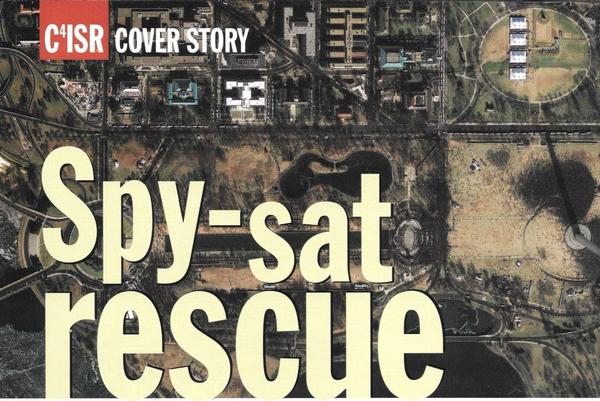
When Ralph Haller returned to the National Reconnaissance Office (NRO) in 2007 after stints at the CIA and in private industry, something was obviously different at the spy-satellite agency's Chantilly, Va., property. Four new office buildings had opened since he left in 1993, and with these "towers," as NRO employees call them, came a divided management structure that has contributed to the agency's slow adoption of Internet-like intelligence tools for tapping the agency's spy trove.

Spy Blimps and Heavy Lifters

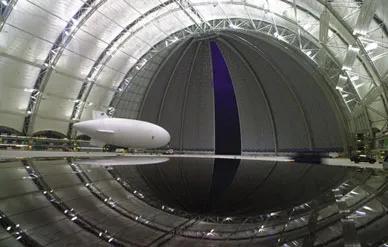
DURING THE PREPARATIONS for the 1996 Summer Olympics in Atlanta, local entrepreneur Mike Lawson rounded up a group of investors, pooled $1 million, and bought a one-person, helium-filled airship. His plan: Persuade Olympics officials to rent the craft for security surveillance. “That little sucker would fly about 50 miles per hour,” Lawson recalls.
On a gloomy day in October 1995, the great nemesis of all airships rose up and dashed his spirit. The remnants of Hurricane Opal blew through Atlanta...

Who Should Fly UAVs?

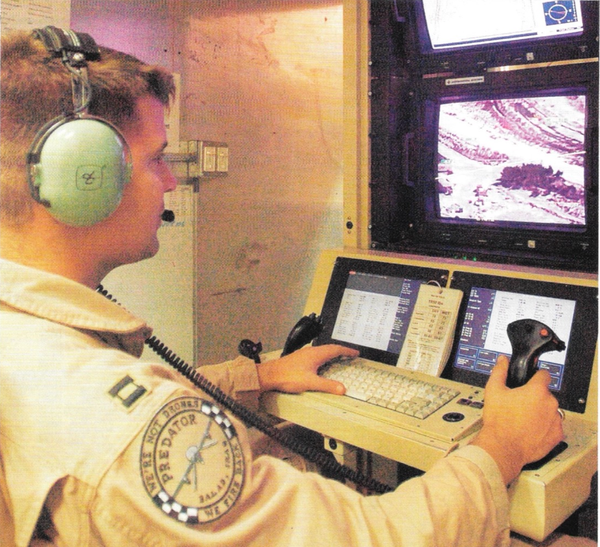
The U.S. Army plans to retire the traditional sticks and rudders its UAV operators are relying on to steer early versions of the Predator-derived Sky Warrior aircraft over Irag and Afghanistan.
Trackballs and clickable screen displays are set to replace those sticks and rudders as the Army seeks to capitalize on what it sees as an ample supply of young, computer-savvy enlisted people willing to learn how to fly UAVs and drop bombs. Those operators are to form the core of the Sky Warrior UAV fleet the Army is building to rival the Air Force's Predators and Reapers.

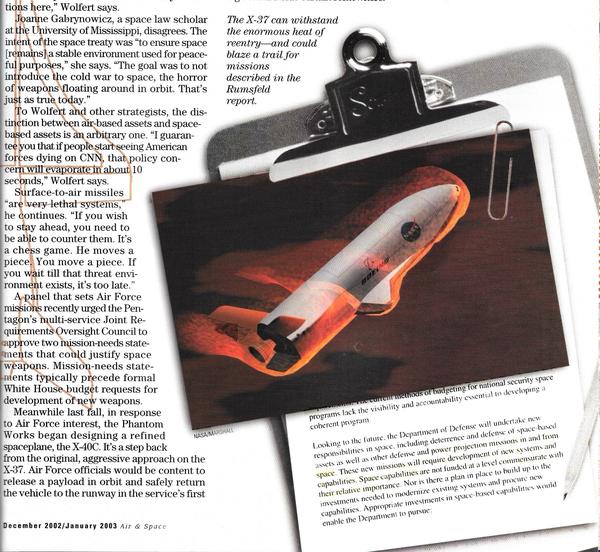
Will the Air Force finally get a spaceplane?

COUNTRY MUSIC SUDDENLY BLARES FROM UNSEEN LOUDSPEAKERS AS VETERAN Boeing manager Dennis Rainwater opens the door to a large, gymnasium-like room. Inside, a blue curtain blocks the view of the far side of the chamber.
Rainwater has to shout to be heard. “Behind the blue curtain is something you’re not supposed to see,” he yells.
Or hear, for that matter. The country crooning drowns out the conversations of people working on whatever is behind the curtain and disguises the sounds of tools that mig...

Climate

It’s time to replace those hurricane cone graphics

Each hurricane season, terabytes of temperature, humidity and pressure collections from satellites and hurricane hunter aircraft are fed into forecasting models and ultimately boiled down into the famous hurricane forecasting cones published online by the National Hurricane Center and adapted by local television forecasters.

The collective experience with those cones this hurricane season should prove once and for all that the cones are a dangerous failure as a communications tool. When Hurrica...

Aviation’s Overdue Embrace of Bold Innovation

Walking the exhibit halls of the Paris Air Show back in 2015, I had a hankering to write a story about what it would take to build a totally climate-friendly airliner, one with roughly the passenger capacity and ranges of conventional hydrocarbon versions. Not thinking of hydrogen, I assumed that meant one powered by battery-supplied electricity, like Airbus Group’s tiny, piloted E-Fan plane, then grabbing headlines. In front of me were booths filled with executives and researchers from all the...

Taking the temperature on temperature

With an alarming frequency, the public keeps hearing that this or that year was “the hottest on record.” Almost true to form, NOAA and NASA in January announced that 2019 was the second-warmest year ever measured. In fact, nine out of the 10 hottest years in the era of instrument-recorded global temperatures dating back to the late 1800s occurred in the past decade. The drumbeat continues, with 2020 on its way to dethroning 2016 as the warmest yet on average across our planet’s surface.

For cli...